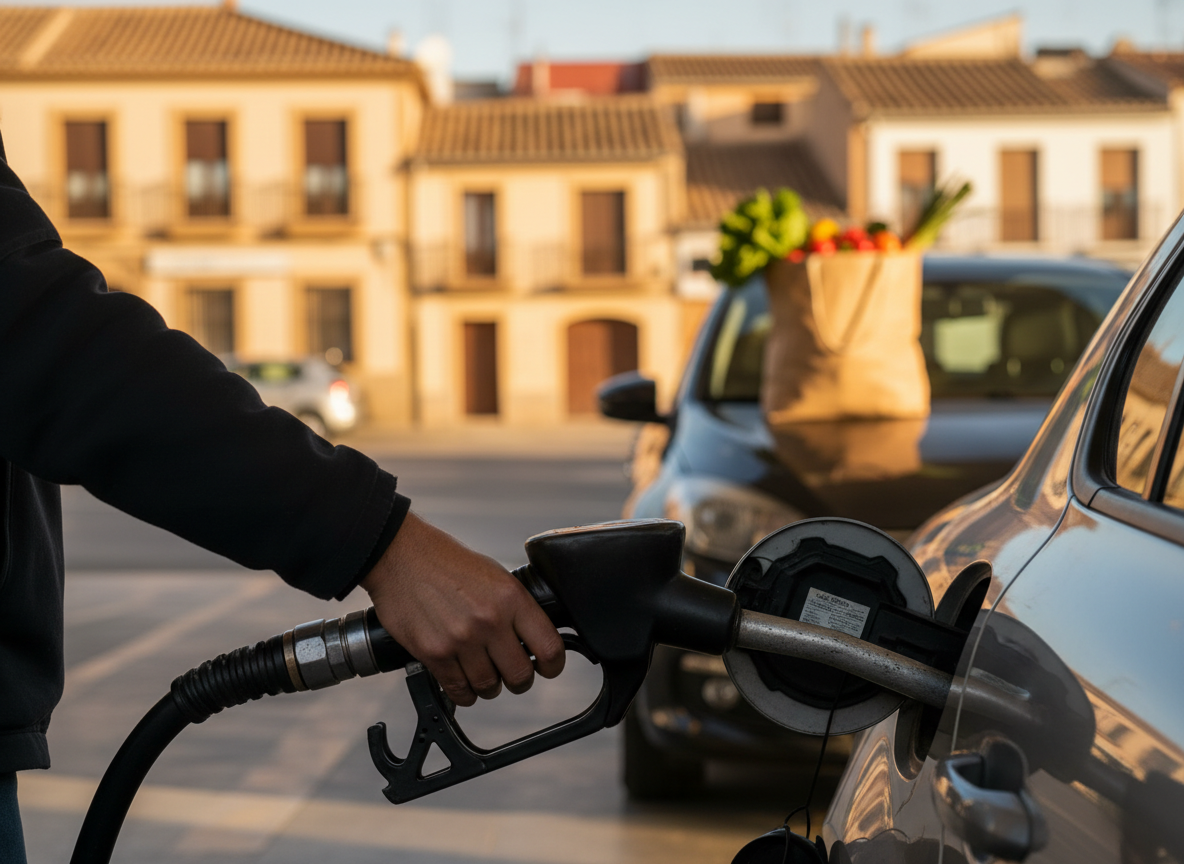
Consumer prices in Spain rose 4.9% year on year in September 2026, according to the flash estimate from the national statistics office, the highest rate since February 2023. Pricier fuel is the main driver, and core inflation also climbed to 3.1%.
Key takeaways
- Spain’s annual inflation rose to 4.9% in September, up from 4.3% in August, the third monthly increase in a row.
- Fuel prices are the main cause; core inflation (excluding energy and unprocessed food) reached 3.1%.
- For a household spending €2,000 (about $2,280) a month, keeping the same basket now costs roughly €100 (about $115) more per month.
What happened
On 29 September, Spain’s National Statistics Institute (INE, the government agency that publishes the country’s official price data) released its flash estimate of the Consumer Price Index (CPI). Annual inflation came in at 4.9%, six tenths of a point higher than in August (4.3%). It is the third consecutive monthly rise and the highest reading since February 2023, when inflation reached 6%.
According to the INE, the jump is mainly explained by motor fuels and lubricants, whose prices rose this September after falling in September 2025. Package holidays also played a role, because they fell less than a year earlier. Several news outlets link the rise in fuel prices to tensions in the Middle East involving Iran, which kept Brent crude above $100 a barrel on many days during the month.
Other figures from the flash estimate:
- Core inflation (excluding energy and unprocessed food): 3.1%, two tenths higher than in August. It is above 3% for the first time in more than two years.
- Monthly change: prices rose 0.3% compared with August.
- Harmonised index (HICP), the measure used to compare inflation across the euro area: 5.0% year on year.
This is a provisional figure. The INE will publish the final number, with a full breakdown by spending category, in mid-October.
What it means for your money
An inflation rate of 4.9% means that, on average, the same basket of goods and services costs almost 5% more than a year ago. Here is an illustrative example with round numbers (dollar amounts use roughly $1.14 per euro):
- Household spending: a household that spent €2,000 a month (about $2,280) a year ago now needs about €2,098 (about $2,390) to buy the same things: €2,000 × 1.049 = €2,098. That is close to €100 more per month (about $115), or almost €1,200 a year (about $1,370).
- Savings: if you have €10,000 saved (about $11,400) in an account paying 2% a year, you earn about €200 (about $230) in interest. But with prices rising 4.9%, the real return is roughly 2% − 4.9% ≈ −2.9%, so that money loses about €290 of purchasing power (about $330) over a year.
- Wages: if your pay does not rise by at least 4.9%, in practice you can buy less than a year ago.
Averages hide differences: people who drive a lot will feel it more, because fuel is what has risen most. For Spanish pensioners, the 2027 increase in contributory pensions is calculated from average CPI between December 2025 and November 2026, so high-inflation months like this one will tend to push that adjustment up.
What you can do
- Compare fuel prices before filling up. In Spain, the Ministry for the Ecological Transition’s Geoportal shows prices at every petrol station, and the gap between stations can be significant.
- Review your fixed bills (electricity, gas, internet, insurance). Cutting there offsets part of the increase. See our practical guide on how to lower your electric bill.
- Don’t leave savings idle. Compare the returns on interest-paying accounts, fixed-term deposits or short-term government bills (in Spain, Letras del Tesoro) so your money loses less value to inflation.
- Update your budget with current prices and plan your weekly shop with a list to avoid impulse spending.
Sources
- INE: CPI flash estimate, September 2026 (Spanish)
- Infobae (wire services): CPI jumps to 4.9% in September (Spanish)
- COPE: CPI jumps to 4.9% in September on higher fuel prices (Spanish)
- CaixaBank Research: EUR/USD FX flash, 29 September 2026 (exchange rate used for dollar conversions)
Written by The Daily Economy editorial team with AI assistance and checked against the sources above. Read our editorial policy.