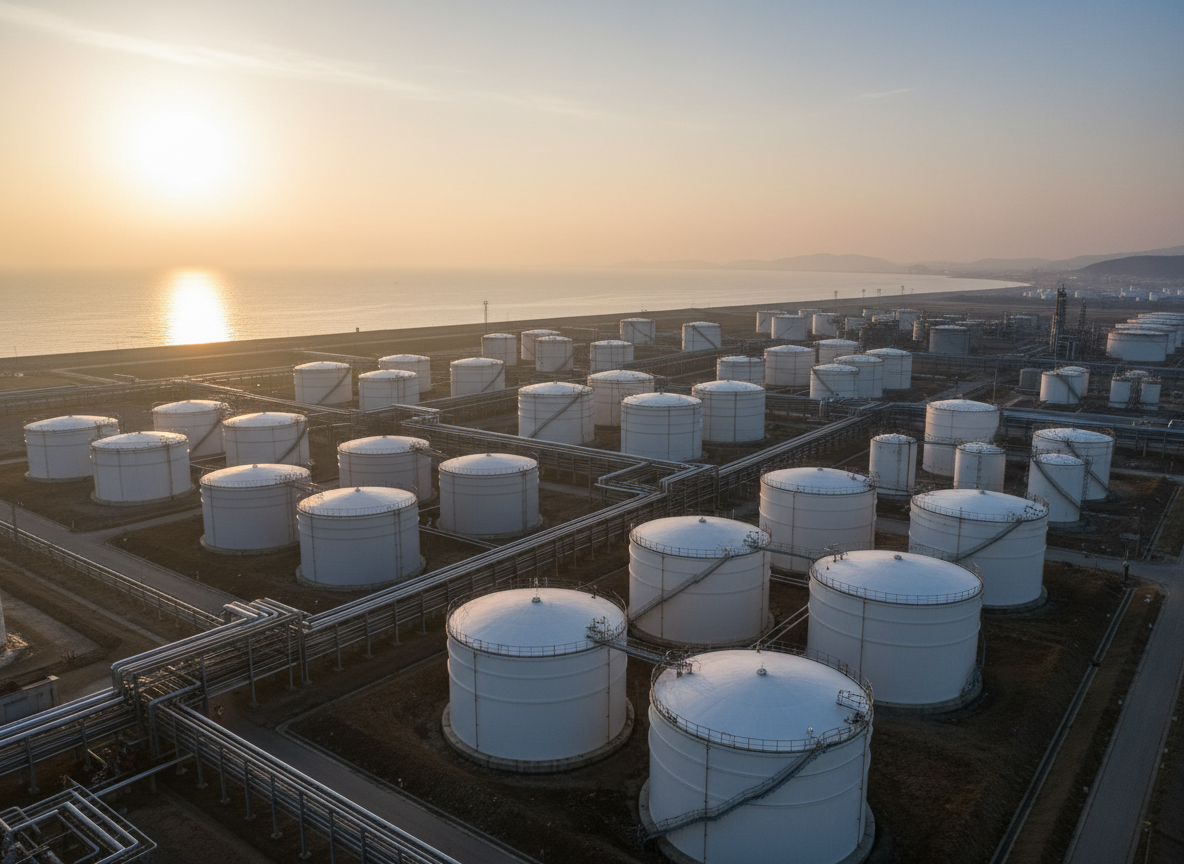
Tens of thousands of people marched against high rents in more than 50 Spanish cities on Saturday, with 70,000 in Madrid by the government’s count, after Congress repealed new tenant protections, while a storm alert pushed Barcelona’s march to Monday. Oil markets head into Sunday’s OPEC+ meeting with Brent near $102 a barrel despite the G7’s 100-million-barrel reserve release, as a tanker was struck off Oman and France’s borrowing premium over Germany stays above 150 basis points.
Spain
Tens of thousands march for cheaper rents as calls for a general strike grow. The Government Delegation in Madrid estimated 70,000 people at Saturday’s housing march, which converged on Plaza de Cibeles, while the Tenants’ Union (Sindicato de Inquilinas) put the figure at around 500,000; protests were held in more than 50 cities a day after Congress voted down two government decrees that would have let tenants extend leases, capped rent rises and limited purchases of homes by investors. With the decrees gone, the previous rental rules apply again, and organisers are pushing for a general strike over housing costs. (Europa Press / Infobae, Diario en Positivo, Córdoba BN)
Petrol and diesel close in on €2 a litre. The latest EU Oil Bulletin puts the average price of petrol in Spain at €1.939 a litre and diesel at €1.934, both up again on the week, with petrol rising for 13 weeks in a row. Filling a 55-litre tank now costs roughly €25 or more than a year ago, although Spanish pump prices remain below the EU average; on the markets, the Ibex 35 ended Friday at 19,085.30 points but lost 3.12% over the week. (Infobae, Cadena de Suministro, Pressdigital)
Catalonia
Junts tables its own housing plan after sinking the government’s decrees. After its votes helped repeal the rent and eviction decrees, the Catalan party handed the Spanish government a 59-page alternative that includes voluntary lease extensions of up to two years when both sides agree, state-funded protection for vulnerable tenants, tax deductions for renting and limits on discounted bulk purchases of homes by investment funds until 2028. Junts argues the real problem is a shortage of rental supply, while Prime Minister Pedro Sánchez said his government would not back down, leaving tenants facing uncertainty over which rules will apply next. (El Nacional, Infobae, Confilegal)
Storm alert forces Barcelona’s housing march to be postponed to Monday. The rent protest called by the Sindicat de Llogateres, the PAH and other housing groups for Saturday in L’Hospitalet de Llobregat was called off after Catalonia’s Civil Protection service recommended suspending outdoor activities, with 17 coastal districts on maximum alert for torrential rain until Sunday; organisers moved the march to Monday at 7 pm from Plaça d’Urquinaona in Barcelona. The delay keeps the cost of renting at the top of the Catalan agenda as tenants’ groups push for lower rents after the repeal of the national rent decrees. (elDiario.es, VilaWeb, Europa Press / aldia.cat)
France
France’s borrowing premium over Germany tops 150 basis points for the first time since 2011. The extra yield investors demand to hold French 10-year bonds rather than German ones passed 1.5 percentage points on Friday, with the French 10-year yield closing around 4.87% a day after reaching its highest level since 2002. The CAC 40 still rose 0.79% to 7,897 points as oil prices fell, but lost 2.24% over the week; higher state borrowing costs make the budget harder to balance and can push up loan rates for households. (Boursorama / Reuters, BFM Bourse)
United Kingdom
IG Group shares plunge about 25% after a profit warning. The online trading platform reported third-quarter revenue of £240 million, down 14% on a year earlier, and cut its 2026 growth forecast from 10–15% to mid-single digits, dragging rivals CMC Markets and Plus500 lower too. The FTSE 100 still closed 0.32% higher at 10,461.95, though UK investors are watching gilt yields near multi-year highs, which keep mortgage costs elevated. (City A.M., Sharecast, Bloomberg)
Germany
Federal audit office warns pensions could absorb a far bigger share of tax revenue. The Bundesrechnungshof estimates that federal payments to the pension system, now about 29% of federal tax revenue, would rise to 36.7% by 2040 under current law and to almost 46% if the government’s planned reforms go ahead. It called the permanent guarantee of the pension level a major budget risk, a warning that points to tougher choices on taxes, contributions or other spending in the years ahead. (ZDFheute, ad-hoc-news)
Italy
Government approves its budget plan and seeks extra deficit room for energy and defence. The cabinet approved the public finance planning document, raising expected growth for 2026 to 1.0% from 0.6% and forecasting 0.8% for 2027, and asked parliament for about €28–29 billion of additional deficit room over 2027–28, split between energy support and defence. Public debt is projected at 138.1% of GDP this year and 138.6% in 2027; parliament votes on the request on October 13, and the energy funds could help cushion household and business bills. (ANSA, Open, AGI)
Portugal
Fuel prices set to fall next week. Diesel is expected to drop by about 3 cents a litre and petrol by about 3.5 cents from Monday, from averages of roughly €2.18 and €2.10, according to industry estimates, with the final change depending on Friday’s market close. It would bring some relief to drivers and transport firms after weeks of increases linked to the Middle East conflict. (SOL, A Bola)
United States
Stocks rally on weak jobs data but the Dow and S&P 500 end the week lower. The S&P 500 closed 0.7% higher at 7,722.72, the Dow rose 0.5% to 51,176.96 and the Nasdaq gained 1.2% to 27,190.86 after September’s jobs report reduced the odds of a Federal Reserve rate hike this month; over the week the Dow still fell 1.3% and the S&P 500 0.3% amid the bond sell-off. Tesla rose about 4–5% after third-quarter deliveries of 486,532 vehicles beat expectations. (AP, Yahoo Finance)
G7 agrees a 100-million-barrel emergency oil and diesel release after US pressure. Group of Seven countries, coordinated by the International Energy Agency, will release 100 million barrels of crude and diesel over four months, with a large share of the diesel in the first 20 days, after Washington pressed Europe to act on fuel prices. US crude fell 1.9% to settle at $91.11 a barrel; analysts expect the extra supply to ease diesel prices only gradually, which matters for freight and food costs. (AP / BNN Bloomberg, Euronews, Rigzone)
Canada
TSX snaps a four-day losing streak but ends the week down 1.3%. The S&P/TSX composite index rose 347.89 points, or about 1%, to 35,502.65 on Friday, led by industrial stocks, as the weak US jobs report eased fears of higher US interest rates. The Canadian dollar held near 70 US cents, a level that keeps imports and cross-border travel more expensive for Canadians. (Canadian Press / Yahoo, Baystreet.ca)
Mexico
Peso rebounds but posts a fourth straight weekly loss. The Bank of Mexico’s FIX reference rate was 18.16 pesos per dollar on Friday, a recovery of about 0.7% that ended four days of losses, but the currency still lost roughly 2.6% over the week as higher US yields reduced the appeal of Mexican assets. The S&P/BMV IPC stock index rose 1.1% to 64,531.68 on the day but fell 0.71% on the week. (El CEO, EFE / ABC Color, El Mañana)
Brazil
Ibovespa gains 4.7% on the week ahead of Sunday’s election. Brazil’s main index jumped 2.63% on Friday to 192,115 points, its highest since April, for a weekly gain of 4.71% and about 19% so far this year, while the dollar was nearly flat at R$5.22. The final Datafolha poll shows President Lula on 45% of valid votes and Flávio Bolsonaro on 40% in the first round, with a technical tie in a possible runoff; investors see the result as key for public finances and for interest rates, with market rates around 13.5–14%. (InfoMoney, Times Brasil, Gazeta do Povo)
Argentina
Country risk hits its 2026 high despite investment pledges. JP Morgan’s country-risk index for Argentina touched 655 basis points on Friday, its highest of the year, as dollar bonds fell about 2% over the week, even though the government said a promotional “Argentina Week” in Paris brought about $27 billion in investment pledges, including from TotalEnergies and Glencore. A higher risk premium makes it more expensive for the state and companies to borrow abroad. (La Nación, El Cronista, Bloomberg Línea)
Central bank keeps buying dollars as reserves rise to $48.65 billion. The central bank bought another $35 million on Friday and gross reserves rose by $364 million to $48.653 billion, while the wholesale dollar eased about 0.3% to around 1,520 pesos. Steady purchases help rebuild the reserves Argentina needs to pay its debts and keep the peso stable. (Infobae, Uno Entre Ríos, Ámbito)
Morocco
Tourism receipts reach a record of nearly 98 billion dirhams. Foreign visitors spent MAD 97.9 billion (about $9.9 billion) in Morocco in the first eight months of 2026, up 9.7% on a year earlier, according to Office des Changes data, while arrivals rose 4.5% to 14.1 million. The inflow of foreign currency helps offset a wider trade deficit; on Friday, however, the Casablanca MASI index fell 1.57% to 17,303.69 points and the dollar rose to about 9.94 dirhams. (Le360, Morocco World News, Infomédiaire, The Rio Times)
Egypt
Central bank and Industry Ministry launch a fund to rescue struggling factories. The Central Bank of Egypt and the Industry Ministry set up an EGP1 billion (about $19 million) fund that will take stakes in distressed factories with viable assets and restructure their loans and operations, with major state and private banks taking part. The aim is to restart idle production capacity and protect industrial jobs at a time when a weaker pound, trading above 52 per dollar, is raising costs for manufacturers. (Ahram Online, Amwal Al Ghad)
Nigeria
Public-sector warning strike over fuel prices starts with patchy turnout. The three-day strike called by public-service unions began on Friday with partial compliance: federal offices closed in Ondo State, which reported about 50% participation, while turnout was uneven in Oyo and many workers stayed at their desks elsewhere. The unions are demanding a cut in petrol prices, which range from about ₦1,450 to ₦2,000 a litre, an immediate wage award and a higher minimum wage; no talks or concessions from the government had been reported. (Nigerian Tribune, Leadership, Vanguard)
South Africa
Drivers brace for record fuel prices next week. End-of-month data from the Central Energy Fund point to petrol 95 rising by about R3.12 a litre to roughly R30 inland and diesel by a similar amount from Wednesday, October 7, which would be the highest prices in South Africa’s history; the official adjustment is still to be confirmed by the energy ministry. Higher fuel costs feed into transport fares and food prices and add to inflation pressure. (BusinessTech, The Witness)
China
Rail travel hits a record as the Golden Week holiday begins, but overall trips dip. China’s railways carried 25.2 million passengers on October 1, up 9% on a year earlier and the most ever in a single day, but total cross-regional trips across all modes fell 1.9% to about 329.5 million as road travel declined 2.8%. The holiday is closely watched as a test of consumer spending; official spending figures are not yet available. (Xinhua, SBS)
Refiners halt October fuel exports to rebuild stocks. Chinese refiners have suspended October exports of diesel, gasoline and jet fuel, except to Hong Kong and Macau, as domestic diesel stocks sit about 20 million barrels below pre-war levels. The move tightens global fuel supply and helped lift oil prices earlier in the week. (Reuters / Business Recorder, Hydrocarbon Processing)
Japan
Unemployment edges up to 2.5% and the Nikkei falls almost 1%. Japan’s jobless rate rose to 2.5% in August from 2.4% in July, with 1.18 jobs available per applicant, still a tight labour market that supports wage growth. The Nikkei 225 fell 0.94% to 68,309.46 on Friday as investors took profits after a strong two-day rally and high oil prices weighed on sentiment. (Xinhua, Trading Economics, Xinhua (markets))
India
Forex reserves drop $18.3 billion as the RBI defends the rupee. India’s foreign exchange reserves fell by $18.34 billion to $747.56 billion in the week to September 25, central bank data showed, the second big drop in a row as the Reserve Bank of India sold dollars to support a rupee that has lost more than 6% this year. A weaker rupee makes imported oil, electronics and foreign travel more expensive. (PTI / DT Next, Whalesbook)
Economists expect a rate rise at the RBI’s October 7 decision. Most economists polled expect the Monetary Policy Committee, which meets from October 5 to 7, to raise the repo rate by a quarter point to 5.50% to fight oil-driven inflation, with retail inflation at 4.82% in August. A hike would raise borrowing costs for home and car loans. (Business Standard, BW Businessworld)
South Korea
KOSPI climbs back above 7,000 points. Seoul’s benchmark index rose 0.45% to 7,003.74 on Friday, its first close above 7,000 in five sessions, as investors bought technology shares on the dip; the won stood at about 1,350 per dollar. Chipmakers are riding record exports, which reached $120.9 billion in September, up 83.5% on a year earlier. (Korea JoongAng Daily, Al Jazeera, Seoul Economic Daily)
Middle East
OPEC+ meets on Sunday and is expected to keep output targets unchanged. Seven core members of the producer group, including Saudi Arabia and Russia, are likely to leave November targets steady at an online meeting on October 4, according to sources cited by Reuters. Their output was about 25 million barrels a day in August, some 5 million below pre-conflict levels, so any surprise could move fuel prices worldwide. (Reuters / Investing.com, AGBI)
Tanker hit off Oman as Brent holds near $102. A Kuwaiti-flagged crude tanker was struck on its port side by an unknown projectile about 4 nautical miles east of Oman late on Friday, the UK Maritime Trade Operations agency said, adding that all crew were safe and no pollution had been reported. The incident is a reminder of the shipping risks that keep insurance and freight costs high, after Brent ended the week roughly unchanged at around $101–102 a barrel while US crude fell to $91.11 on the G7 reserve release. (ANI, Anadolu / A News, EnergyNow)
Australia
ANZ drops KPMG as auditor after 57 years. ANZ will put its external audit out to tender from the 2028–29 financial year and has barred KPMG, its auditor since 1969, from bidding, following KPMG’s scandal over the misuse of confidential client documents. KPMG earned A$21.4 million in audit fees from the bank in 2024–25. (AAP, Bloomberg)
ASX 200 gains 0.8% to finish the week slightly higher. The benchmark closed at 8,682.1 points on Friday, up 0.2% over the week, with the Australian dollar steady at about 69.4 US cents. Lenders are passing on higher funding costs, with NAB lifting some fixed mortgage rates by up to 0.32 percentage points. (ABC News, SmallCaps)
Sources & method
Compiled by The Daily Economy editorial team with AI assistance from the sources linked in each item, cross-checked in at least two outlets, and updated several times a day. Read our editorial policy.