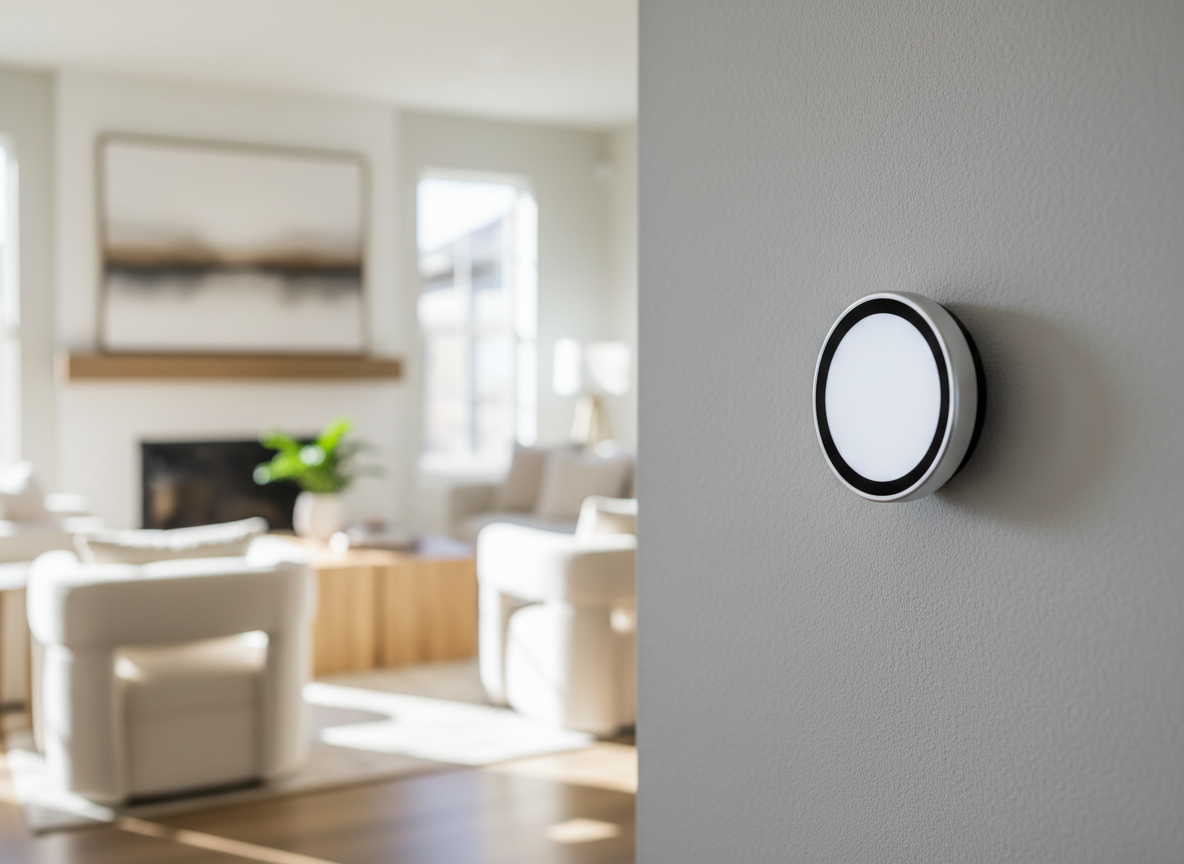
For most homes with central heating or air conditioning, a smart thermostat is worth it, but the savings are modest. ENERGY STAR estimates that certified smart thermostats save about 8% of heating and cooling bills, or roughly $50 a year on average. With a typical price of $100–$250, that usually means a payback of two to five years, faster if your utility offers a rebate or your energy bills are high. If you already adjust your thermostat diligently, expect less.
Quick answer
| Question | Short answer |
|---|---|
| Average savings (ENERGY STAR) | About 8% of heating and cooling bills, ~$50/year |
| DOE guidance on setbacks | Up to ~10% a year by turning back 7–10°F for 8 hours a day |
| Typical price | ~$100–$250 before rebates |
| Typical payback | ~2–5 years |
| Best for | People who don’t reliably adjust the thermostat, irregular schedules, high bills |
| Less useful for | Homes with baseboard/line-voltage heat (needs a special model), people who already set back manually |
Savings vary by climate, home and rates.
What the official sources actually say
It’s worth being precise here, because many product pages overstate the numbers.
ENERGY STAR
ENERGY STAR certifies smart thermostats based on real-world data from homes using them. Its guidance states that, on average, savings are approximately 8% of heating and cooling bills or $50 per year, and it notes that actual savings vary with climate, comfort preferences, occupancy patterns and the type of heating and cooling equipment. That $50 is an average across many homes; some save much more, some very little.
U.S. Department of Energy
The DOE’s long-standing guidance is about thermostat setbacks, not smart thermostats specifically: you can save as much as 10% a year on heating and cooling by turning your thermostat back 7–10°F from its normal setting for 8 hours a day, such as while you sleep or are at work. A smart thermostat is simply a reliable way to make that happen automatically.
The DOE also cautions that heat pumps need care with setbacks: a large setback can make a heat pump call on its backup electric resistance heat to recover, which can wipe out the savings. Many smart thermostats have heat pump settings that manage this.
What neither source says: that every home will save 10–23% or that a smart thermostat pays for itself in a year. Be wary of those claims.
How a smart thermostat saves energy
A smart thermostat doesn’t make your furnace or AC more efficient. It saves money by running them less when you don’t need them:
- Schedules and learning: some models learn your routine; others let you set schedules from an app.
- Occupancy detection: motion sensors or your phone’s location (“geofencing”) can switch to an away setting when everyone leaves.
- Remote control: forgot to turn the heat down before a trip? Fix it from your phone.
- Usage reports: monthly summaries show how long your system ran and why.
- Utility programs: many utilities offer bill credits for letting them nudge your thermostat slightly during peak demand events.
Worked payback examples
To estimate your savings, start with how much you spend on heating and cooling per year. Your utility bills or online account usually show monthly use; our guide to how to read your electric bill helps you find it.
Example 1: an average home
- Annual heating and cooling cost: $1,000
- Savings at 8%: $1,000 × 0.08 = $80 a year
- Thermostat cost: $180, minus a $50 utility rebate = $130
- Payback: $130 ÷ $80 = about 1.6 years
Example 2: a small apartment in a mild climate
- Annual heating and cooling cost: $400
- Savings at 8%: $400 × 0.08 = $32 a year
- Thermostat cost: $130, no rebate
- Payback: $130 ÷ $32 = about 4 years
Example 3: someone who already sets back manually
If you already turn the heat down every night and every workday, much of the 8% is already in your pocket. Savings might be only 2–3%:
- $1,000 × 0.025 = $25 a year
- Thermostat cost: $180
- Payback: $180 ÷ $25 = about 7 years
Example 4: electric cooling cost math
With electricity at about 18 cents per kWh (close to the recent US average residential price, according to the U.S. EIA), a central AC using 3,000 kWh a summer costs 3,000 × $0.18 = $540. Raising the setpoint while you’re away so the system runs 8% less saves 240 kWh × $0.18 = about $43 a cooling season.
When a smart thermostat is worth it
A smart thermostat tends to pay off when:
- You forget to adjust the temperature, or your schedule changes day to day.
- The house is empty for long stretches, like workdays or frequent travel.
- Your heating and cooling bills are high, so 8% is a meaningful dollar amount.
- Your utility offers a rebate, which can cut the upfront cost significantly.
- You’re on time-of-use rates, where pre-cooling or pre-heating before expensive hours can help. See time-of-use electricity rates explained.
When it may not be worth it
- You’re already disciplined with a basic programmable thermostat and it’s working.
- Someone is home all day and wants a steady temperature.
- You have electric baseboard heat with line-voltage thermostats; most smart thermostats won’t work without a model designed for it.
- Your bills are small, so 8% is only a few dollars a year.
- Your system lacks a C-wire (a common power wire). Many models include an adapter, but some installs need an electrician or HVAC tech.
Tips to get the most out of one
- Set real setbacks. A thermostat that holds 72°F all day saves nothing. Aim for around 68°F (20°C) when home in winter and lower when asleep or away; around 78°F when home in summer, and higher when away.
- Enable away mode or geofencing so it responds when the house is empty.
- Use heat pump settings if you have one, to avoid unnecessary backup heat.
- Place it well: avoid spots near sunny windows, lamps, kitchens or drafty doors that can fool the sensor.
- Pair it with other upgrades. A thermostat controls when heat is used; insulation and air sealing reduce how much is needed. Our guide on how to save on heating this winter covers the rest.
A note on rebates and tax credits
Smart thermostats weren’t covered by the federal 25C home-efficiency credit, and that credit ended for expenditures after December 31, 2025, in any case. The best place to look for money back is your electric or gas utility, many of which offer instant rebates or bill credits for ENERGY STAR certified smart thermostats. Check your utility’s website before buying.
Frequently Asked Questions
How much does a smart thermostat save per year?
ENERGY STAR estimates about 8% of heating and cooling bills, or around $50 a year on average for certified models. Your savings depend on your climate, habits, equipment and rates.
Is a smart thermostat better than a programmable one?
It can be, because it’s easier to use and adapts when you leave. But a programmable thermostat that’s set and used correctly can deliver similar setback savings for less money.
Do smart thermostats work with heat pumps?
Most do, and many have settings to limit backup electric heat during recovery. Check compatibility with your specific system before buying.
Do I need a C-wire?
Many smart thermostats need continuous power from a C-wire. Some include a power adapter or use batteries. Check the manufacturer’s compatibility tool first.
Can a smart thermostat hurt my savings?
It can if you set a warmer winter or cooler summer temperature than before because it’s so convenient. The savings come from setbacks, not the device itself.
The bottom line
Smart thermostat savings are real but modest: about 8% of heating and cooling bills, or roughly $50 a year on average according to ENERGY STAR. For most households that don’t already set back their thermostat consistently, that means a payback of a few years, often faster with a utility rebate. If you’re already disciplined with a programmable model, the upgrade is more about convenience than savings. Savings vary by climate, home and rates.
Figures in this guide are estimates based on typical US prices at the time of writing. Savings vary by home, climate and utility rates — check your own bill before making a purchase.
