Window film can cut the heat and glare coming through sunny windows, and in hot climates that can trim your air-conditioning bill. For most US homes with modern double-pane windows, though, the savings are modest — often tens of dollars a year rather than hundreds — so whether it pays off depends on your climate, which way your windows face, and whether you install it yourself.
Quick answer: is window film worth it?
| Situation | Likely payoff | Why |
|---|---|---|
| Single-pane windows, hot sunny climate (AZ, TX, FL) | Good | Lots of solar heat to block and weak glass to start with |
| Large west- or south-facing windows, any warm climate | Fair to good | Afternoon sun drives AC load and hot spots |
| Modern double-pane low-e windows | Poor for savings | The glass already blocks much of the solar heat |
| Cold, cloudy climate (Upper Midwest, Pacific NW) | Poor to negative | Solar-control film can block free winter heat from the sun |
| Main goal is glare, fading or comfort | Often worth it | Benefits you feel even if the bill barely moves |
Typical cost: about $1–$5 per square foot DIY, or roughly $7–$24 per square foot professionally installed, depending on the film type.
What window film actually does
Window film is a thin polyester layer applied to the inside of the glass. Energy-saving films come in a few main types:
- Solar-control (spectrally selective or ceramic) film rejects a large share of the sun’s heat while letting much of the visible light through. This is the type most people mean by “energy-saving film.”
- Reflective metallized film blocks heat well but gives a mirrored look from outside and darkens rooms.
- Low-e film adds a coating that also reflects some of your room’s heat back inside in winter, so it helps in both seasons.
- Decorative or privacy film (frosted, patterned) is mostly about looks and privacy, with little energy benefit.
Nearly all of these films block most ultraviolet light, which helps slow fading of floors, rugs and furniture.
The key spec to look at is the solar heat gain coefficient (SHGC) of the glass-plus-film combination. It runs from 0 to 1 — the lower the number, the less solar heat gets through. The U.S. Department of Energy’s building research program notes that films are best suited to warm and hot climates, and that they “may increase heating needs in winter,” because they block the sun’s free warmth too.
How much can window film save?
There is no single number, because savings depend on how much sun hits the glass and how hard your AC works. The best public data comes from commercial buildings, not homes, so treat it as an upper bound.
In a U.S. General Services Administration (GSA) evaluation run with Lawrence Berkeley National Laboratory, low-e film on single-pane clear glass cut heating and cooling energy in the perimeter zones next to the windows by about 29% on average, ranging from about 38% in Phoenix to roughly 21–22% in Minneapolis. The GSA estimated the whole-building savings at about a third of that, and reported a payback of two to six years — again for single-pane glass.
Most American homes built in the last few decades have double-pane windows, often with a low-e coating already, so the extra gain from film is much smaller. A realistic way to estimate your own savings is to work from your cooling bill.
Worked example: a sunny room in a warm climate
Say your central AC uses about 2,000 kWh over a summer, and you film 120 square feet of west- and south-facing glass. If that cuts your cooling use by 5–10%, the math looks like this:
- Energy saved: 2,000 kWh × 5–10% = 100–200 kWh per year
- Price: the U.S. Energy Information Administration (EIA) expects the average residential electricity price to be about 18 cents per kWh in 2026
- Savings: 100–200 kWh × $0.18 = about $18–$36 per year
Now the cost side:
- DIY ceramic film: 120 sq ft × $3–$5 = $360–$600 → payback of roughly 10–33 years
- Professional install: 120 sq ft × $10–$24 = $1,200–$2,880 → payback of 30+ years on energy alone
That is why window film rarely pays for itself on modern double-pane windows if bill savings are the only goal.
Worked example: single-pane windows in a hot climate
The picture changes with older single-pane windows in a place like Phoenix or Houston. Suppose your AC uses 4,000 kWh a summer and film on the sunniest windows trims that by 10–15%:
- 4,000 kWh × 10–15% = 400–600 kWh per year
- 400–600 kWh × $0.18 = about $72–$108 per year
- DIY film at $360–$600 pays back in roughly 3–8 years
If your utility charges more than average — rates in many states are well above the national figure — the payback shortens further. Check the per-kWh price on your own bill (our guide on how to read your electric bill shows where to find it).
These are illustrative estimates, not guarantees. Your real savings depend on your climate, window orientation, shading from trees or overhangs, and your thermostat habits.
When window film makes sense
Film is most likely to be worth it when:
- You have single-pane or older clear double-pane windows and replacing them isn’t in the budget.
- You live somewhere hot and sunny, and your AC runs for months.
- A specific room overheats — a west-facing living room or a sunroom — and you want comfort as much as savings.
- Glare or fading is a problem. Many people buy film for comfort and UV protection, and treat any energy savings as a bonus.
- You rent and can use removable static-cling film (check your lease first).
It usually isn’t worth it when your windows already have low-e coatings, when the windows face north or are well shaded, or when you live in a cold climate and rely on winter sun for some warmth. If you are in a heating-dominated area and still want film, look for a low-e film designed to help in winter, not a dark solar-control tint.
Window film vs other fixes
Before spending on film, compare it with cheaper or more effective options:
| Option | Relative cost | Best for |
|---|---|---|
| Light-colored or cellular shades, closed in the afternoon | Low | Cheap heat and glare control you can adjust |
| Exterior awnings or solar screens | Medium | Stopping heat before it reaches the glass |
| DIY window film | Low to medium ($1–$5 per sq ft) | Permanent, clear-view heat and UV control |
| Professional window film | Medium ($7–$24 per sq ft) | Large or hard-to-reach windows, warranty coverage |
| Replacement windows | High | Old, drafty or failing windows |
Blocking the sun outside the glass (awnings, exterior screens, shade trees) generally works better than anything inside, because the heat never enters the house. Inside, a closed light-colored shade is cheap and adjustable — and unlike film, you can open it on a cold sunny day. For more no-cost ideas, see how to keep your house cool without AC.
And if your windows leak air, film won’t fix that. Sealing gaps around frames usually gives a better return; our weatherstripping guide walks through it.
Things to check before you buy
Your window warranty
Some window manufacturers warn that aftermarket film can void the warranty on insulated (double-pane) glass, because absorbing extra heat can stress the glass or seals. Read your window warranty first, and choose a film the film maker says is compatible with your glass type. Reputable film brands often publish glass-compatibility charts.
Film performance labels
Look for the film’s SHGC, visible light transmission (VLT) and UV rejection on the product label or spec sheet. A good energy film for a hot climate keeps SHGC low while keeping VLT high enough that rooms don’t feel dark.
HOA or rental rules
Reflective films change how windows look from the street. Some homeowner associations restrict them, and landlords may not allow permanent film.
DIY vs professional
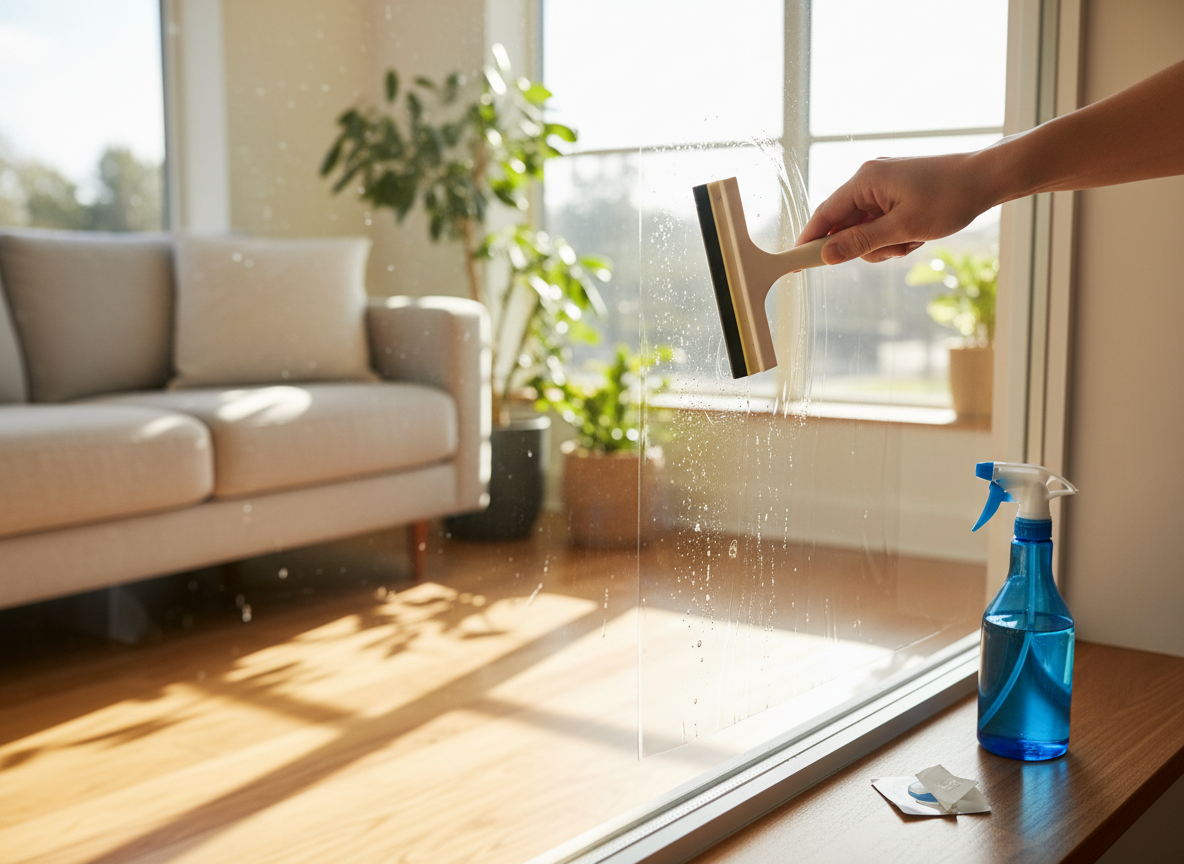
DIY film is affordable and doable on small, flat windows with patience, a spray bottle and a squeegee. Bubbles, dust and creases are the common problems. Professional installers cost more but handle large panes, carry warranties, and usually stock higher-performance ceramic films.
Frequently Asked Questions
Does window film help in winter?
Standard solar-control film can actually raise winter heating needs slightly, because it blocks some of the sun’s free warmth. Low-e films reflect some indoor heat back into the room, which helps a little in winter, but they don’t replace good windows or insulation.
How long does window film last?
The GSA evaluation cites a service life of roughly 15 years for the commercial film it tested. Real lifespan depends on the product and sun exposure, and cheap films may peel or bubble sooner. Check the manufacturer’s warranty for its stated lifespan.
Will window film make my rooms darker?
It depends on the film. Dark or reflective films noticeably reduce light, while spectrally selective ceramic films are designed to block heat while keeping much of the visible light. Compare the VLT number before you buy.
Is window film cheaper than new windows?
Much cheaper up front — DIY film for a few windows can cost a few hundred dollars, while replacing windows usually runs far more. But new windows also fix drafts, condensation and noise, which film can’t. If your windows are failing, film is a stopgap, not a substitute.
Can I get a tax credit for window film?
No federal credit is available now. The federal energy-efficient home improvement credit (25C) ended for expenses after December 31, 2025. Some utilities offer rebates on efficiency upgrades, so check your utility’s website.
The bottom line
Window film is a solid buy if you have single-pane or older windows in a hot, sunny climate, or if one room bakes every afternoon. In those cases it can pay back in a few years and make the room more comfortable. On modern double-pane low-e windows, or in cold climates, the bill savings are usually too small to justify the cost — shades, awnings and air sealing will do more for less. If you go ahead, film the sunniest glass first, check your window warranty, and start with DIY ceramic film on a small window to see the difference before you commit to the whole house.
Sources
- U.S. Energy Information Administration, Short-Term Energy Outlook (October 2026), residential electricity price forecast.
- U.S. General Services Administration, Green Proving Ground, Low-E Window Film findings (with Lawrence Berkeley National Laboratory).
- Pacific Northwest National Laboratory, Building America Solution Center, Window Attachments: Solar Control and Energy Efficiency.
- WindowFilm.com, window film cost ranges by film type.
Figures in this guide are estimates based on typical US prices at the time of writing. Savings vary by home, climate and utility rates — check your own bill before making a purchase.
Written by The Daily Economy editorial team with AI assistance and checked against the sources above. Read our editorial policy.